
- brushing teeth
- morning oral hygiene
- dental care
- oral health
- dentist Kharkiv
Introduction
Most people learn from an early age that teeth should be brushed twice a day. Still, morning oral hygiene raises a common question: should you brush before breakfast or after breakfast? The answer depends not only on the exact timing of morning brushing, but also on the quality of your overall routine: evening hygiene, interdental cleaning, diet and how you respond to acidic foods.
Why evening brushing is so important
Throughout the day, your teeth collect food debris, dental plaque and bacteria. That is why evening brushing has a special role: before sleep, it is important to clean the mouth thoroughly after the last meal of the day.
A complete evening routine often includes:
• floss or interdental brushes
• careful tooth brushing
• mouthwash, if recommended by your dentist
This helps reduce plaque and the amount of bacteria left in the mouth overnight.
What happens in your mouth while you sleep
During sleep, saliva production naturally decreases. Saliva helps clean the teeth and neutralise acids, so bacteria can multiply more easily when the mouth is drier overnight.
This is why many people wake up with:
• morning breath
• dry mouth
• a light layer of plaque
When evening oral hygiene is done properly, these effects are usually less noticeable.
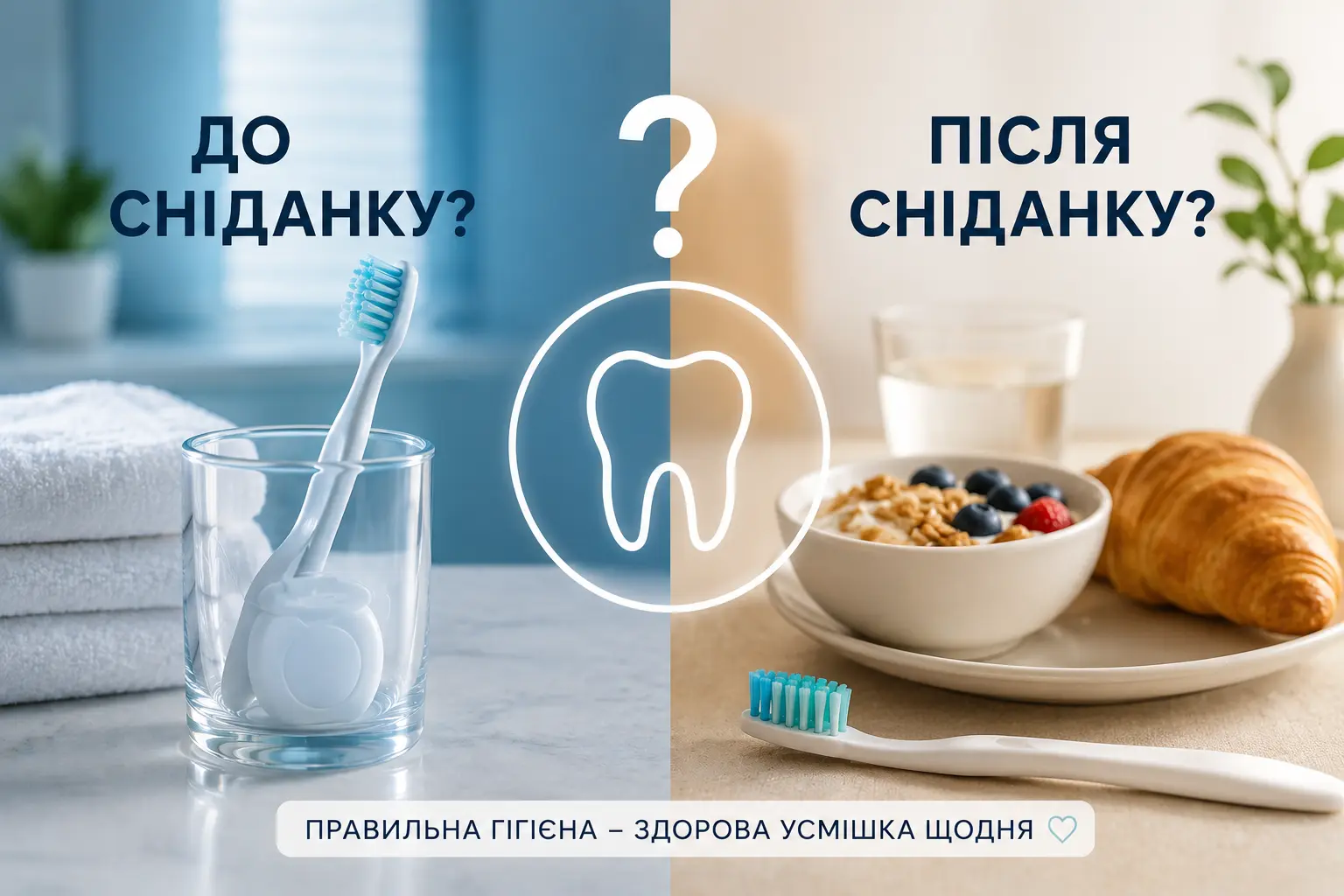
Should you brush before or after breakfast?
There is no single rule that works perfectly for everyone. If your teeth were cleaned thoroughly in the evening, many patients find it practical to eat breakfast first and then brush their teeth to remove new food particles.
This approach can help keep the mouth feeling clean during the first part of the day. Brushing before breakfast can also be acceptable if it feels better for you or if your dentist recommends it based on your oral health.
Benefits of brushing after breakfast
After eating, your teeth are exposed to food particles, carbohydrates and organic acids. Brushing after breakfast can help reduce plaque, freshen breath and remove residue left by the morning meal.
This can be especially useful if breakfast includes sweet, sticky or crumbly foods that tend to remain between the teeth.
An important exception: acidic foods
If breakfast includes citrus fruits, fruit juice, soft drinks or other acidic foods, it is better not to brush aggressively right away. In many cases, waiting about 30 minutes is a better option.
This gives saliva time to help restore a healthier pH balance in the mouth. If you want to refresh your mouth immediately after eating, rinsing with water is a simple first step.
Daily oral hygiene best practices
For healthy teeth and gums, consistency matters. Dentists generally recommend brushing twice a day, cleaning between the teeth with floss or interdental brushes and keeping up with preventive checkups.
Mouthwash, irrigators and products for sensitive teeth should be chosen individually, because needs can vary depending on enamel condition, gum health, bite, restorations or orthodontic treatment.
Common mistakes
One common mistake is brushing only in the morning and skipping evening hygiene. In reality, the bedtime routine is especially important because plaque and food debris have accumulated throughout the day.
It is also important not to ignore the areas between teeth. A toothbrush cannot clean every surface fully, so floss or interdental brushes remain an important part of home care.
What to do
If you are not sure when to brush in the morning, start with a practical routine: thorough evening hygiene, breakfast and then morning brushing. If breakfast was acidic, wait about 30 minutes or rinse your mouth with water first.
Pay attention to how your teeth and gums feel, how quickly plaque returns and whether your gums bleed during brushing. If sensitivity, bleeding or persistent bad breath appears, it is worth discussing your routine with a dentist.
When to see a dentist
Book a dental visit if:
• your gums bleed while brushing
• bad breath returns quickly
• your teeth have become sensitive
• plaque builds up quickly despite regular brushing
• you are not sure whether your toothbrush, toothpaste or floss is right for you
During a consultation, the dentist can assess your teeth and gums, identify areas that are hard to clean and adjust your home care routine.
Treatment options
FAQ
Questions about Should You Brush Your Teeth Before or After Breakfast?
Can I brush my teeth immediately after waking up?
Yes. This is an acceptable option. However, if your teeth were cleaned well in the evening, many patients prefer brushing after breakfast to remove new food residue.
Do I have to brush after breakfast?
Not necessarily for everyone, but brushing after breakfast often helps maintain a cleaner feeling in the mouth for longer during the day.
Which is more important: morning or evening brushing?
Both matter, but evening brushing is especially important for preventing tooth decay and gum problems because it removes plaque accumulated during the day.
Should I wait after acidic foods?
Yes. After citrus fruits, juices, soft drinks and other acidic foods, it is usually better to wait about 30 minutes before brushing.
Should I floss every day?
In most cases, yes. Floss or interdental brushes help clean the spaces between teeth where a toothbrush cannot reach properly.
Book a consultation
Book a consultation at White Rabbit Dental if you want to choose the right home hygiene routine, check your gum health or understand which oral care products fit your needs.
Book a consultation to get individual recommendations and the next best step for your smile.
Conclusion
The debate about brushing before or after breakfast has been around for years. The most important point is not choosing one universal answer, but keeping oral hygiene consistent and thorough every day. If you clean your teeth carefully in the evening and remove new food debris after breakfast, you can help support healthier teeth, gums and fresher breath throughout the day. After acidic foods, it is better to wait before brushing or rinse with water first.
Next steps