
- tooth decay
- harmful foods
- oral care
- dentist Kharkiv
Introduction
The condition of your teeth depends not only on oral hygiene and regular check-ups, but also on what you eat every day. Some foods create favourable conditions for tooth decay, while others gradually weaken enamel or increase tooth sensitivity. You do not need a perfect diet, but it helps to understand which habits put the most pressure on your teeth and how to reduce that impact in daily life.
Sweets and refined sugar
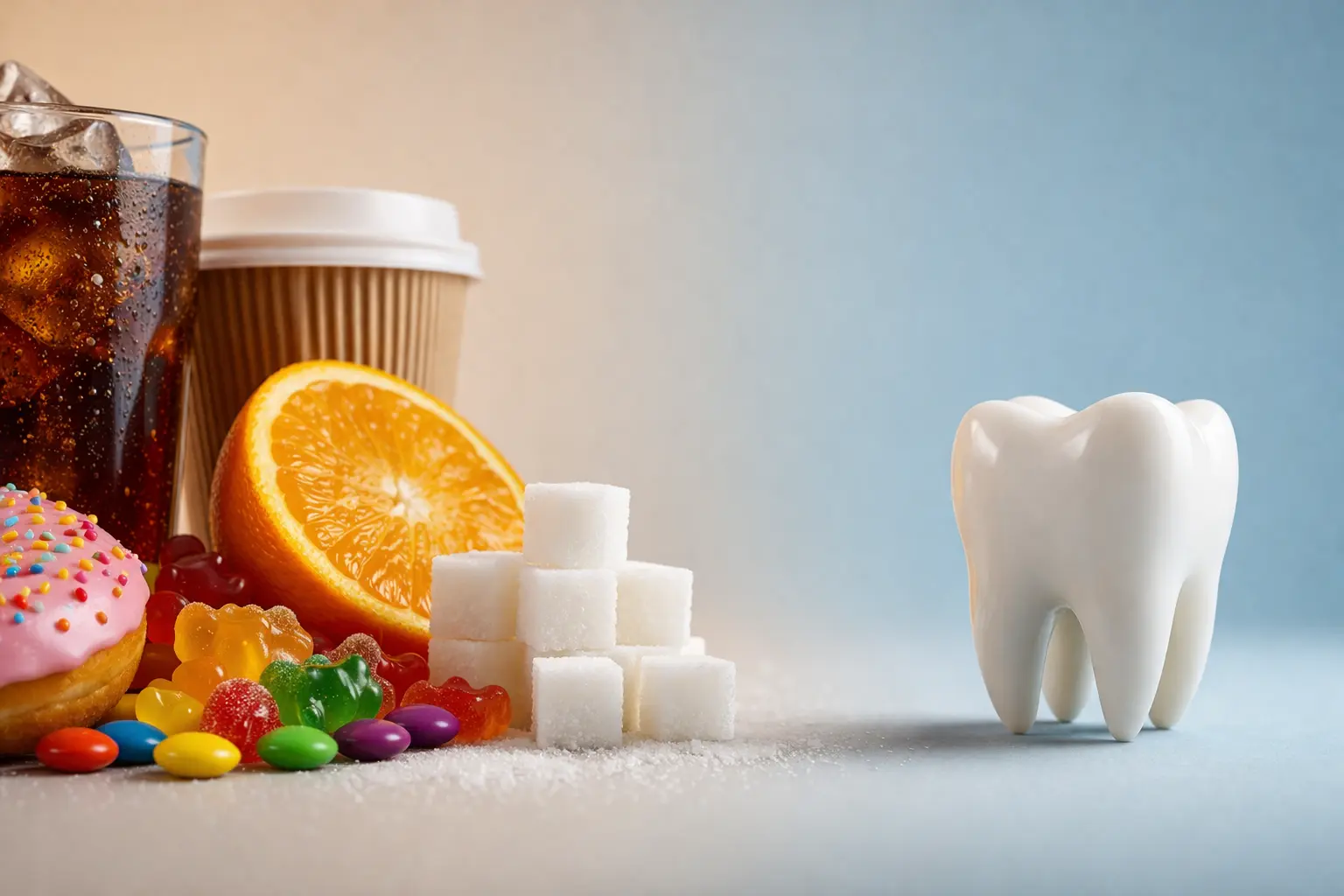
Sugary foods remain one of the most aggressive factors for teeth. This is especially true for sticky desserts, caramel, candy bars, biscuits and sweet drinks.
Bacteria in the mouth use sugar as a food source and release acids in the process. Those acids gradually weaken enamel and increase the risk of tooth decay.
Acidic drinks and foods
Juices, fizzy drinks, citrus fruits in large amounts, energy drinks and foods with high acidity can affect enamel even without a large amount of sugar.
Acid does not only increase sensitivity. It also makes the tooth surface more vulnerable to wear and pigmentation over time.
Frequent snacking and sweet drinks throughout the day
The issue is not only the product itself, but also how often you consume it. If teeth are constantly exposed to a sweet or acidic environment, enamel simply does not have enough time to recover.
That is why sipping sweet drinks slowly throughout the day or having constant small snacks can be more harmful than one normal meal followed by proper oral care.
Staining foods and drinks
Coffee, tea, red wine, some berries and sauces do not always damage teeth directly, but they can affect the appearance of enamel.
If teeth already have micro-damage or a slightly worn surface, pigments can settle more easily and make the smile look darker.
Hard snacks and the habit of biting hard objects
Croutons, very hard nuts, ice or the habit of opening things with your teeth are not necessarily linked to decay, but they can lead to microcracks and chipped enamel.
This type of damage is not always obvious immediately, but later it may cause sensitivity, discomfort or the need for restorative treatment.
What to do
To reduce the impact on your teeth, you do not need to give up all your favourite foods. It is more important to control frequency, portion size and your home care routine after meals.
Helpful habits include:
• avoiding sweet drinks over long periods during the day
• rinsing your mouth with water after acidic or sugary food
• not brushing immediately after very acidic meals
• maintaining regular oral hygiene
• attending preventive check-ups and professional cleaning
When to see a dentist
It is worth booking a consultation if:
• your teeth have become sensitive to cold or acidic food
• you notice stains or darkening
• you suspect tooth decay
• meals often lead to discomfort
• enamel feels weaker or you notice chips
Treatment options
• teeth whitening, if the issue is mainly pigmentation rather than enamel damage
FAQ
Questions about Foods That Harm Your Teeth: What To Limit
Do I need to stop eating sweets completely?
Not necessarily, but it helps to control how often you eat them and avoid leaving a sugary environment in the mouth for long periods.
Are fruits bad for teeth?
In moderation, fruit is a normal part of a healthy diet, but acidic fruits and juices may affect enamel when consumed frequently.
What should I do after something acidic or sweet?
Rinse your mouth with water and avoid brushing immediately if the food or drink was very acidic.
Is coffee always bad for teeth?
Coffee is more often linked to staining than direct tooth damage, but in combination with sugar and frequent consumption it can still increase stress on the enamel.
Book a consultation
Book a consultation if you want to assess the condition of your enamel, reduce sensitivity or choose preventive care that fits your diet and habits.
Book a consultation to get individual recommendations and the next best step for your smile.
Conclusion
Diet has a major influence on the condition of your teeth. Even with regular oral hygiene, frequent sugary, acidic or enamel-stressing foods can gradually contribute to decay, sensitivity and visible changes in your smile. Moderation, good home care and timely dental advice help reduce these risks and protect your teeth in the long term.
Next steps