
Short answer
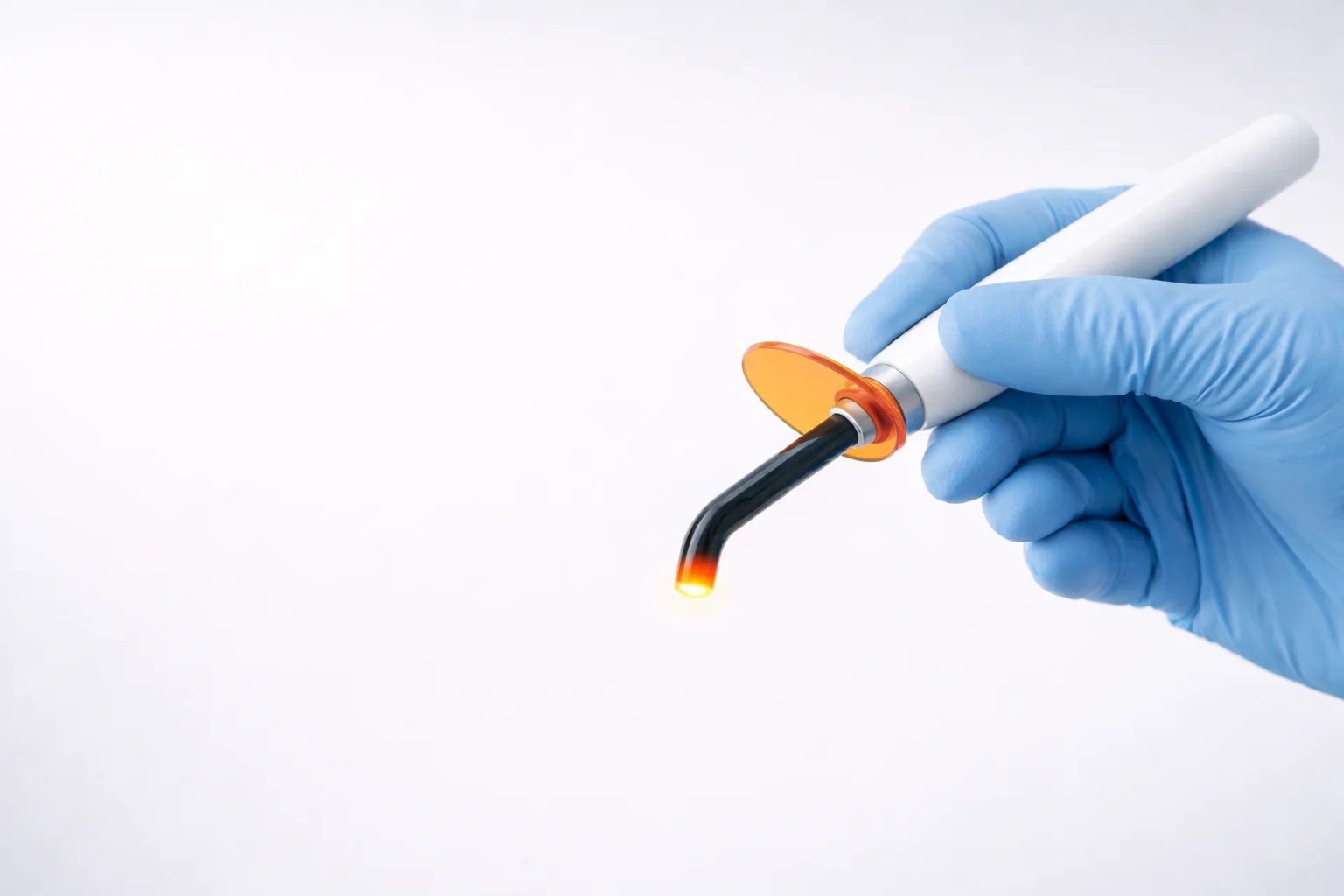
Therapeutic dentistry treats caries, pulpitis, root canal problems, chips, leaking fillings and other tooth damage when the tooth can still be preserved. The first step is usually examination and diagnostics because pain, sensitivity or a dark spot do not always require the same treatment. At White Rabbit Dental in Kharkiv, the goal is to remove the cause of the problem and restore the tooth in a functional, realistic way.
Treatment scope
Which problems therapeutic dentistry can solve
This treatment direction covers situations where a tooth is damaged, painful, sensitive or needs restoration after previous treatment. The exact scope is defined after examination.
Caries and leaking fillings
The dentist removes damaged tissue, checks old restorations and restores tooth shape with a filling or direct restoration when this is clinically appropriate.
Pulpitis and root canals
If infection or inflammation reaches the pulp, endodontic treatment may be needed to clean, disinfect and fill the root canals.
Chips, cracks and breakdown
After trauma, a chip or significant tooth breakdown, the dentist evaluates how much healthy tissue remains and explains whether therapeutic restoration is enough.
Who it is for
When therapeutic treatment is the right place to start
Therapeutic treatment is often the first treatment stage when a tooth can be preserved without extraction or more complex restoration.
Pain or sensitivity
Reaction to cold, sweets or heat, pain while chewing or night pain should be diagnosed to distinguish caries, pulpitis, a crack or another cause.
Visible decay, chip or old filling
A dark spot, cavity, crack, lost filling or changed restoration margin may need treatment before complications develop.
Preparation for another treatment
Before prosthodontics, orthodontics or aesthetic procedures, active tooth and gum problems should usually be stabilised first.
When to visit a dentist
- If you have sensitivity to sweets, cold or heat, pain while chewing or spontaneous tooth pain.
- If you notice a cavity, dark spot, leaking filling or a chipped tooth.
- After dental trauma when you need to check the condition of the enamel, dentin or pulp.
- For monitoring previously treated teeth or replacing old restorations that may have lost their seal.
How treatment works
01
After examination, the dentist evaluates the depth of the problem and may recommend imaging if necessary.
02
Caries is cleaned out, or endodontic treatment is performed if infection has reached the pulp or canals.
03
The tooth is then restored with a filling or direct restoration according to its anatomy and function.
04
The dentist checks the bite, polishes the restoration and explains home-care recommendations.
Treatment pathway
How the decision is made: filling, root canal, crown or extraction
Therapeutic dentistry is not one single procedure. The dentist first evaluates the depth of the problem, tooth prognosis and bite load, then explains the most reasonable stage.
1. Diagnose the cause
Examination and imaging when indicated help clarify whether the issue is limited to enamel and dentin or has reached the pulp or tissues around the root.
2. Choose the treatment scope
A smaller lesion may need a filling. Pulp involvement may require root canal treatment. Major breakdown may require prosthodontic restoration.
3. Restore shape and function
After decay or infection is treated, the tooth is restored so it can handle chewing load and fit the bite correctly.
4. Check the prognosis
If the tooth prognosis is uncertain, the dentist explains the limits of therapeutic treatment and possible next steps, including prosthodontics or oral surgery.
Limitations
When therapeutic treatment may not be enough
Preserving a tooth is a priority only when it is safe and reasonably predictable. The final decision is made after examination and diagnostics.
Too little healthy structure
If the tooth is heavily damaged and a filling cannot handle chewing load, a crown, onlay or another prosthodontic option may be needed.
Poor root prognosis
A deep crack, significant root damage or repeated inflammation may mean root canal treatment cannot provide a stable result.
Active inflammation or swelling
In acute situations, the dentist first assesses risks, imaging needs and urgent steps before planning the final restoration.
Need for broader planning
When the issue is connected with bite, missing teeth or future prosthodontics, the therapeutic stage is coordinated with other treatment directions.
Benefits
- A chance to preserve the natural tooth at early and moderate stages of damage.
- Treatment combined with practical restoration of chewing function.
- An individual choice of materials and restoration approach.
- Therapeutic dentistry in Kharkiv with clear explanation of the problem and next steps.
Decision support
How to understand which option may be needed
Patients do not need to choose between a filling, root canal treatment, crown or extraction on their own. This section explains the decision logic before consultation.
Filling or direct restoration
Often suitable when the lesion is not too deep, enough healthy tissue remains and the tooth can be restored directly.
Root canal treatment
Considered when inflammation has reached the pulp or root canals. Afterward, the tooth usually needs reliable restoration.
Crown or other restoration
May be needed when the tooth is weakened and a filling alone will not provide enough support for chewing.
ProsthodonticsExtraction when indicated
Considered only when preserving the tooth is no longer safe or predictable.
Oral surgeryComfort and aftercare
What patients may feel and what matters after treatment
Therapeutic treatment is planned with patient comfort in mind, but sensations depend on the depth of the problem, treatment scope and individual sensitivity.
During treatment
Anesthesia is used when needed. You may feel pressure, vibration or the work of instruments, but strong pain should not be treated as normal during the procedure.
After a filling
Temporary sensitivity or a new bite contact can happen. If discomfort does not settle or interferes with chewing, a correction visit may be needed.
After root canal treatment
The tooth may feel sensitive when biting for a few days. The dentist explains what is expected and which symptoms should prompt contact.
Home care
Daily hygiene, bite control and preventive checkups help maintain the restoration and detect changes early.
Cost
What affects the cost of therapeutic treatment
Cost depends on the diagnosis, depth of the lesion, number of surfaces or canals, restoration scope and whether additional diagnostics are needed. The exact plan is created after examination.
Depth of caries
A surface lesion, deep caries and pulp inflammation require different amounts of work and time.
Number of canals
Endodontic treatment depends on tooth anatomy, the number of canals, their accessibility and whether previous treatment was done.
Restoration type
A small filling, large restoration, chip repair or preparation for a crown have different levels of complexity.
Additional stages
Imaging, follow-up visits, control appointments or another specialist consultation may affect the overall treatment plan.
The price preview below shows the relevant service category. Final cost is defined after diagnostics and treatment plan approval.
Prices
Prices White Rabbit
| Service | Price |
|---|---|
| Standard consultation | 300 UAH |
| Extended consultation | 500 UAH |
| Targeted dental X-ray | 250 UAH |
| OptraGate placement | 250 UAH |
| Rubber dam isolation | 300 UAH |
| Anesthesia | 250 UAH |
| Service | Price |
|---|---|
| Professional oral hygiene | 1900 UAH |
| Children's professional oral hygiene | 950 UAH |
| Teeth whitening course including professional and at-home whitening stages | 13000 UAH |
| Service | Price |
|---|---|
| Superficial caries treatment | 1500 UAH |
| Moderate caries treatment | 1800 UAH |
| Deep caries treatment | 2200 UAH |
| Tooth reinforcement with fiberglass material | 300 UAH |
| Protective liner | 300 UAH |
| Tooth restoration | from 2500 UAH |
| Primary root canal treatment (restoration not included) | 1500–6800 UAH |
| Root canal retreatment (restoration not included) | 2000–8100 UAH |
| Service | Price |
|---|---|
| Zirconia crown | 7900–8900 UAH |
| Ceramic crown or veneer | 8900–10000 UAH |
| Metal-ceramic crown | 4500 UAH |
| Cast metal crown | 2200 UAH |
| Impressions | 1200–2400 UAH |
| Noritake metal-ceramic implant crown | 10600–14700 UAH |
| Zirconia implant crown | 12600–16800 UAH |
| Removable acrylic denture | from 6500 UAH |
| Clasp denture | 12000–22000 UAH |
| Temporary cosmetic denture | 4500 UAH |
| Service | Price |
|---|---|
| Permanent tooth extraction | 950–2000 UAH |
| Wisdom tooth extraction | 2000–4500 UAH |
| MegaGen AnyOne implant placement | 400 USD |
| MegaGen AnyRidge implant placement | 450 USD |
| Straumann Group Neodent implant placement | 450 EUR |
| Service | Price |
|---|---|
| Pre-treatment orthodontic diagnostics | 2000 UAH |
| Braces (Korea), 1 jaw | 15000 UAH |
| Damon Q/Q2 braces (USA), 1 jaw | from 25000 UAH |
| Braces adjustment, 1 jaw | 750 UAH |
| Braces removal, 1 jaw | 1000 UAH |
| Retainer bonding, 1 jaw | 3000 UAH |
| Orthodontic mini-implant | 100 USD |
| Treatment with Trainer, LM-Activator Myobrace, Aquasplint or Aqualizer appliances | 7000 UAH |
| Treatment with a removable plate appliance | 9000 UAH |
| Diagnostics before aligner treatment | 70 EUR |
| Full course of aligner treatment | 2000–3000 EUR |
Connected decisions
Where to go if another stage is needed
Therapeutic treatment is often connected with diagnosis, prosthodontics or oral surgery when the tooth prognosis is complex.
Start with examination
If you are not sure whether you need a filling, root canal treatment or another direction, it is safer to begin with a consultation.
Dentist consultationRestore a weakened tooth
When a tooth needs a crown, onlay or another structure after treatment, prosthodontics may be the next stage.
ProsthodonticsAssess extraction
If the tooth cannot be preserved predictably, the dentist can explain the surgical option and future restoration route.
Oral surgeryHelpful reading
Articles about tooth pain, treatment and restoration decisions
Patient guides for understanding symptoms, timing and when a damaged tooth may need a broader treatment plan.
Services
Related services
Explore other treatment directions that are often combined with this service or help solve related dental issues.
Consultation
Dentist consultation in Kharkiv with examination, diagnostics, treatment planning and practical recommendations for adults and children.
Learn moreProsthodontics
Prosthodontics in Kharkiv: crowns, veneers, removable prosthetics and functional restoration of chewing comfort and smile aesthetics.
Learn moreOral surgery
Oral surgery in Kharkiv: extractions, complex surgical cases and planning for further restoration of the dental arch.
Learn moreFAQ
Common questions about Therapeutic dentistry
When can caries be treated without more complex procedures?
The earlier you come in, the more likely treatment can be limited to removing damaged tissue and placing a filling without deeper intervention.
Does tooth pain always mean root canal treatment?
No. Pain can have different causes, and a final decision is made only after clinical examination and diagnostics.
How long does a filling last?
It depends on the size of the restoration, bite load, oral hygiene and other individual factors. Regular checkups help monitor its condition.
Can a severely chipped tooth be restored?
Often yes, but the approach depends on how much healthy tissue remains. After the examination, the dentist may suggest a filling, direct restoration or prosthodontic option.
What should I do if an old filling falls out?
It is best not to delay the visit. Exposed tooth tissue can quickly lose protection, which increases the risk of further complications.