
Short answer
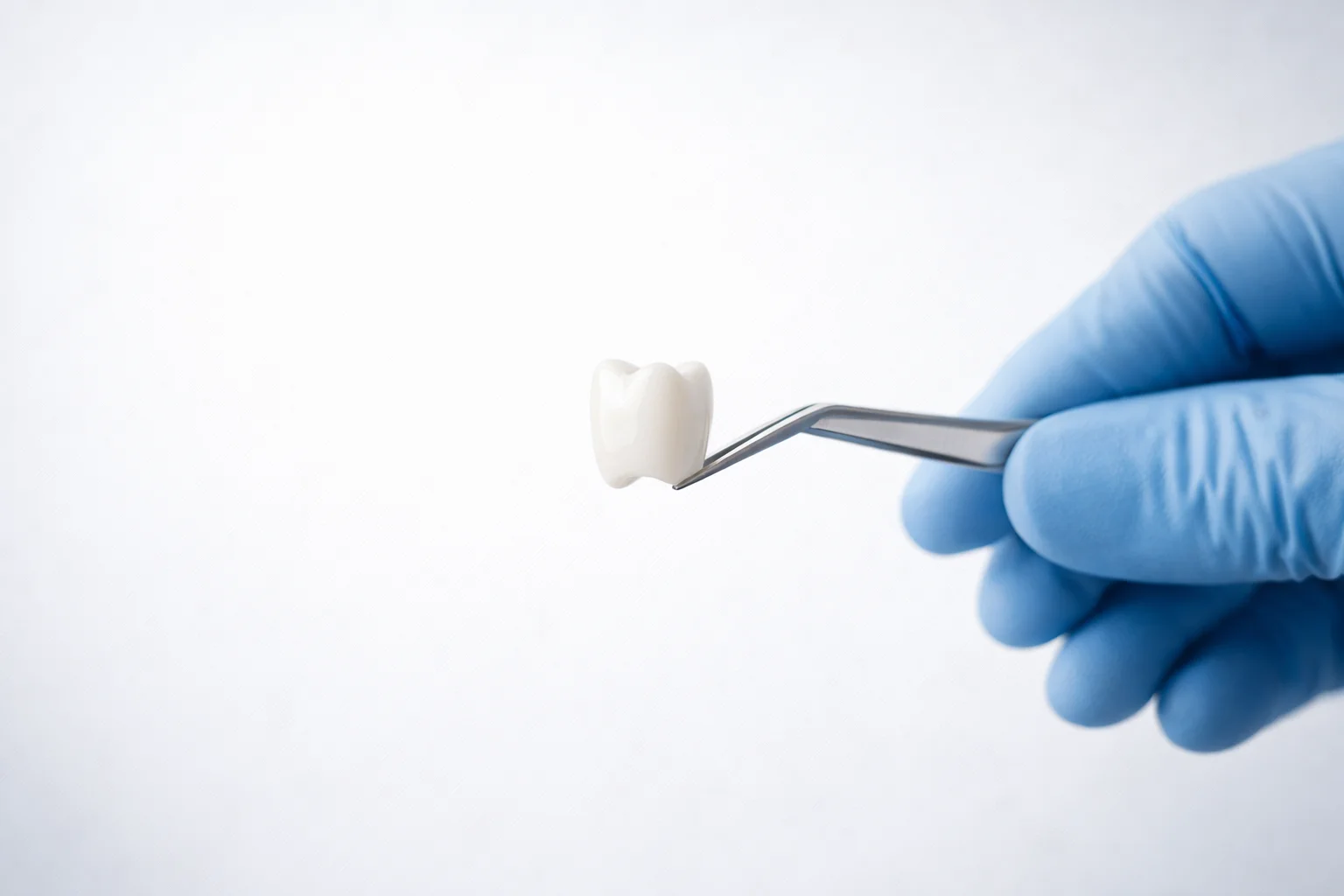
Prosthodontics restores severely damaged or missing teeth with crowns, onlays, bridges, veneers or removable prosthetic options. The right restoration depends on remaining tooth structure, root and gum condition, the number and position of missing teeth, bite load, hygiene, diagnostics and the broader treatment plan. A crown or extraction is not an automatic decision without examination.
Treatment scope
What prosthodontics may include
Prosthodontic treatment is selected after diagnostics. It may restore one tooth, several teeth or part of the dental arch.
Crowns and onlays
Considered when a tooth is weakened or heavily restored and a direct filling may no longer be predictable enough.
Bridges
May be used to restore a gap after tooth loss when supporting teeth and bite conditions make this option appropriate.
Removable dentures
Help restore chewing when several teeth are missing and a fixed option is not optimal or requires other preparation.
Restoration after tooth loss
The plan considers the location of the gap, neighboring teeth, chewing load and possible future treatment stages.
Who may need it
When to consider prosthodontic treatment
A tooth is severely damaged
If there is not enough tooth structure for a regular filling, the dentist evaluates whether an onlay, crown or another protective option is needed.
One or several teeth are missing
A prosthodontic plan helps restore chewing, support the dental arch and reduce overload on neighboring teeth.
Old restorations or bite changes
Old crowns, dentures, tooth wear or chewing discomfort may require reassessment of restorations and bite load.
When to visit a dentist
- If a tooth is significantly damaged and may require a crown or another type of full-coverage restoration.
- When one or several teeth are missing and you want to restore chewing balance and the appearance of the smile.
- If you are considering veneers or another prosthodontic option to improve tooth shape or color.
- After an extraction or before complex treatment when you need a restoration plan.
How treatment works
01
The consultation includes evaluation of the bite, current restorations, supporting teeth and the broader treatment plan.
02
A prosthodontic option is selected, such as crowns, veneers, bridges or removable prosthetics, depending on the case.
03
Teeth or supporting structures are prepared and impressions or digital records are taken for the technical stage.
04
The final restoration is tried in, adjusted and fixed, followed by home-care instructions.
Decision pathway
How the dentist chooses between a filling, crown, bridge or another option
The final plan depends on the clinical situation, not the name of the restoration: tooth structure, roots, gums, bite, number of missing teeth and chewing load all matter.
Filling or direct restoration
Suitable when the damage is limited and enough healthy tooth structure remains for predictable restoration without full coverage.
Crown or onlay
Considered when the tooth is weakened, significantly damaged or needs better distribution of chewing load.
Bridge or removable option
Discussed when one or several teeth are missing, with attention to supporting teeth, bite, hygiene and expected load.
Extraction and later restoration
If the tooth cannot be preserved predictably, the surgical stage and future restoration of the gap are planned together.
Treatment pathway
How prosthodontic treatment usually works
Consultation and diagnostics
The dentist evaluates teeth, gums, bite, old restorations and imaging when needed, then explains realistic options.
Preparation before prosthodontics
Before a restoration, treatment of caries, root canals, gums, extraction when indicated or orthodontic preparation may be needed.
Technical stage
After preparation, impressions or digital records are taken and the restoration is made with attention to shape, bite and function.
Try-in, fixation and care
The final restoration is checked in the mouth, adjusted if needed, fixed or adapted, and care instructions are explained.
When a filling is not enough
Why prosthodontic treatment is not chosen automatically
A crown, onlay or prosthetic restoration is not needed for every patient. The dentist first checks whether a simpler option is possible and what must be prepared.
Too little healthy tooth structure
If a filling would be too large or the tooth is already weakened, a prosthodontic restoration may distribute load more predictably.
Unstable tooth or gum condition
Active caries, gum inflammation, root canal problems or uncertain root prognosis should be addressed before prosthodontics.
Bite has not been considered
If chewing load is not balanced, the restoration may require additional planning or orthodontic assessment.
Hygiene or care is difficult
Long-term control depends on the patient being able to clean around the restoration and attend preventive visits.
Benefits
- Restoration of chewing comfort and everyday function.
- Improved tooth shape and smile harmony based on clinical suitability.
- An individual restoration plan aligned with bite and tissue condition.
- Prosthodontics in Kharkiv with step-by-step planning and realistic expectations.
Related decisions
What may be needed before or instead of prosthodontics
A prosthodontic plan is often connected with other treatment areas. This helps avoid placing a crown or denture before the tooth, gums or bite are ready.
Start with consultation
A consultation helps clarify whether a filling, onlay, crown, bridge, removable option or preliminary treatment is needed.
Dental consultationTreat the tooth first
If there is caries, root canal disease or leaking old fillings, therapeutic treatment may be needed before the restoration.
Therapeutic dentistryAssess the tooth before extraction
If the tooth has a poor prognosis, the surgical stage is planned together with later restoration of the gap.
Oral surgeryConsider tooth position
When bite or tooth position affects future crowns or veneers, orthodontic assessment may be useful.
OrthodonticsComfort and aftercare
Adaptation after crowns, veneers or dentures
Preparation and anesthesia
Anesthesia may be used during tooth preparation. The dentist explains what is planned and what sensations may be expected after the visit.
Temporary restorations
In some cases temporary restorations are used during the technical stage to protect teeth and support appearance.
Adaptation period
After fixation, it can take time to adapt to the shape, height or contact of the restoration during chewing.
Home care
Daily hygiene, gum monitoring, professional reviews and the dentist's recommendations help keep the restoration functional.
Cost factors
What affects the cost of prosthodontic treatment
Cost should not be judged only by the restoration name. It depends on diagnostics, preparation, material, number of teeth and technical stages.
Restoration type and material
A crown, veneer, onlay, bridge or removable denture involves different materials, workload and technical stages.
Number of teeth and gap position
The plan changes depending on whether one tooth, several teeth or a larger part of the dental arch needs restoration.
Preliminary treatment
Therapeutic care, gum treatment, surgical treatment or orthodontic preparation is planned separately if needed.
Try-ins and lab stage
The plan may include fabrication accuracy, several try-ins, bite adjustments and temporary restorations.
Prices
Prices White Rabbit
| Service | Price |
|---|---|
| Standard consultation | 300 UAH |
| Extended consultation | 500 UAH |
| Targeted dental X-ray | 250 UAH |
| OptraGate placement | 250 UAH |
| Rubber dam isolation | 300 UAH |
| Anesthesia | 250 UAH |
| Service | Price |
|---|---|
| Professional oral hygiene | 1900 UAH |
| Children's professional oral hygiene | 950 UAH |
| Teeth whitening course including professional and at-home whitening stages | 13000 UAH |
| Service | Price |
|---|---|
| Superficial caries treatment | 1500 UAH |
| Moderate caries treatment | 1800 UAH |
| Deep caries treatment | 2200 UAH |
| Tooth reinforcement with fiberglass material | 300 UAH |
| Protective liner | 300 UAH |
| Tooth restoration | from 2500 UAH |
| Primary root canal treatment (restoration not included) | 1500–6800 UAH |
| Root canal retreatment (restoration not included) | 2000–8100 UAH |
| Service | Price |
|---|---|
| Zirconia crown | 7900–8900 UAH |
| Ceramic crown or veneer | 8900–10000 UAH |
| Metal-ceramic crown | 4500 UAH |
| Cast metal crown | 2200 UAH |
| Impressions | 1200–2400 UAH |
| Noritake metal-ceramic implant crown | 10600–14700 UAH |
| Zirconia implant crown | 12600–16800 UAH |
| Removable acrylic denture | from 6500 UAH |
| Clasp denture | 12000–22000 UAH |
| Temporary cosmetic denture | 4500 UAH |
| Service | Price |
|---|---|
| Permanent tooth extraction | 950–2000 UAH |
| Wisdom tooth extraction | 2000–4500 UAH |
| MegaGen AnyOne implant placement | 400 USD |
| MegaGen AnyRidge implant placement | 450 USD |
| Straumann Group Neodent implant placement | 450 EUR |
| Service | Price |
|---|---|
| Pre-treatment orthodontic diagnostics | 2000 UAH |
| Braces (Korea), 1 jaw | 15000 UAH |
| Damon Q/Q2 braces (USA), 1 jaw | from 25000 UAH |
| Braces adjustment, 1 jaw | 750 UAH |
| Braces removal, 1 jaw | 1000 UAH |
| Retainer bonding, 1 jaw | 3000 UAH |
| Orthodontic mini-implant | 100 USD |
| Treatment with Trainer, LM-Activator Myobrace, Aquasplint or Aqualizer appliances | 7000 UAH |
| Treatment with a removable plate appliance | 9000 UAH |
| Diagnostics before aligner treatment | 70 EUR |
| Full course of aligner treatment | 2000–3000 EUR |
Related care
Where to go when planning restoration
Dental consultation
Start here if you need to understand whether a filling is enough or prosthodontic restoration is already needed.
Go to consultationTherapeutic dentistry
Relevant when caries, root canals or an old restoration need treatment before a crown or onlay.
Go to therapeutic careOral surgery
Relevant if a tooth cannot be preserved predictably and extraction plus later restoration must be planned.
Go to oral surgeryOrthodontics
May be needed if tooth position or bite affects future crowns, veneers or prosthodontic planning.
Go to orthodonticsClinical cases
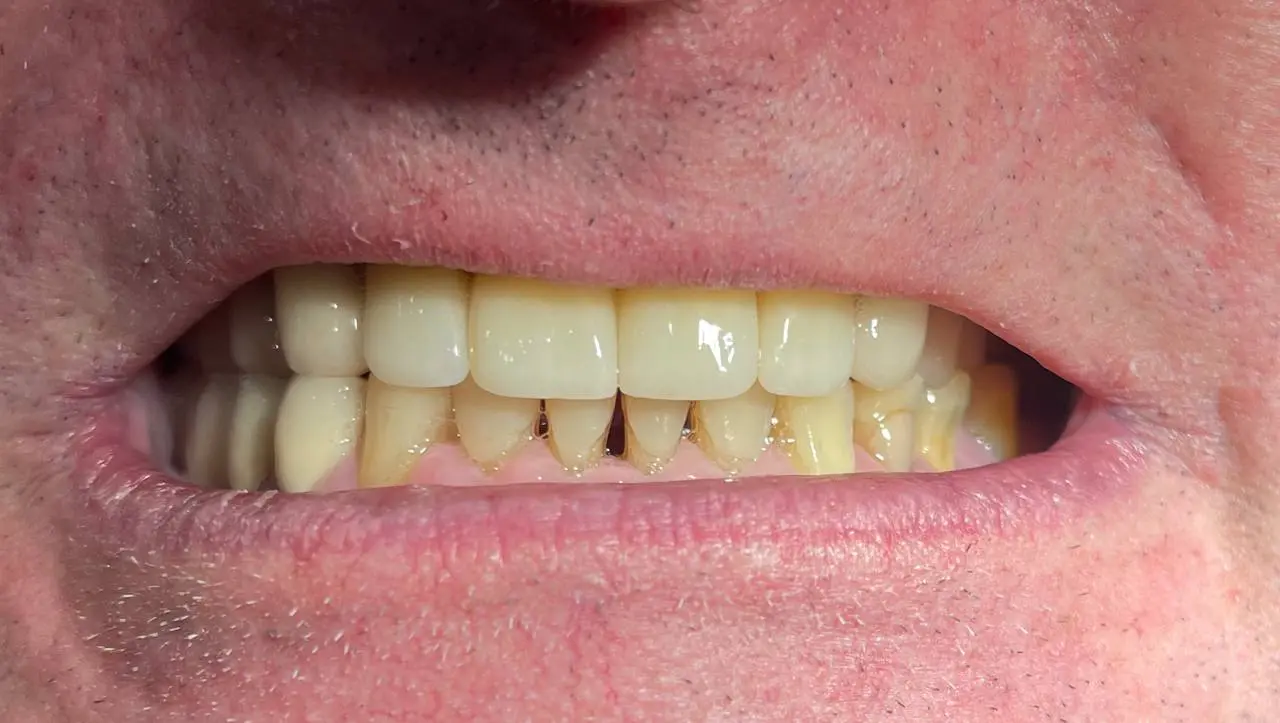
Treatment examples
Selected cases related to this service with treatment stages and important clinical context.
Helpful reading
What to read before prosthodontic treatment
Existing articles explain restoration options and situations where a damaged tooth may still be preserved.
Services
Related services
Explore other treatment directions that are often combined with this service or help solve related dental issues.
Consultation
Dentist consultation in Kharkiv with examination, diagnostics, treatment planning and practical recommendations for adults and children.
Learn moreTherapeutic dentistry
Therapeutic dentistry in Kharkiv: treatment of caries, pulpitis, root canal problems and restoration of teeth with fillings and direct restorations.
Learn moreOral surgery
Oral surgery in Kharkiv: extractions, complex surgical cases and planning for further restoration of the dental arch.
Learn moreFAQ
Common questions about Prosthodontics
When is a crown recommended instead of a filling?
A crown is often considered when a tooth is too damaged for a filling to provide predictable long-term support.
What is the difference between veneers and crowns?
Veneers usually cover the front surface of a tooth mainly for cosmetic correction, while crowns cover the entire tooth and are used when more structure is compromised.
Can several missing teeth be restored with a bridge or removable denture?
In some cases yes. Whether a bridge or removable denture is suitable depends on the number of missing teeth, supporting teeth, bite and hygiene.
How long does prosthodontic treatment take?
Timing depends on the complexity of the case, the chosen restoration and whether preliminary treatment is needed. The sequence is discussed at the consultation.
How should I care for crowns and prosthetic work?
Daily oral hygiene, professional cleaning and regular dental reviews are important. Care instructions may vary depending on the type of restoration.