
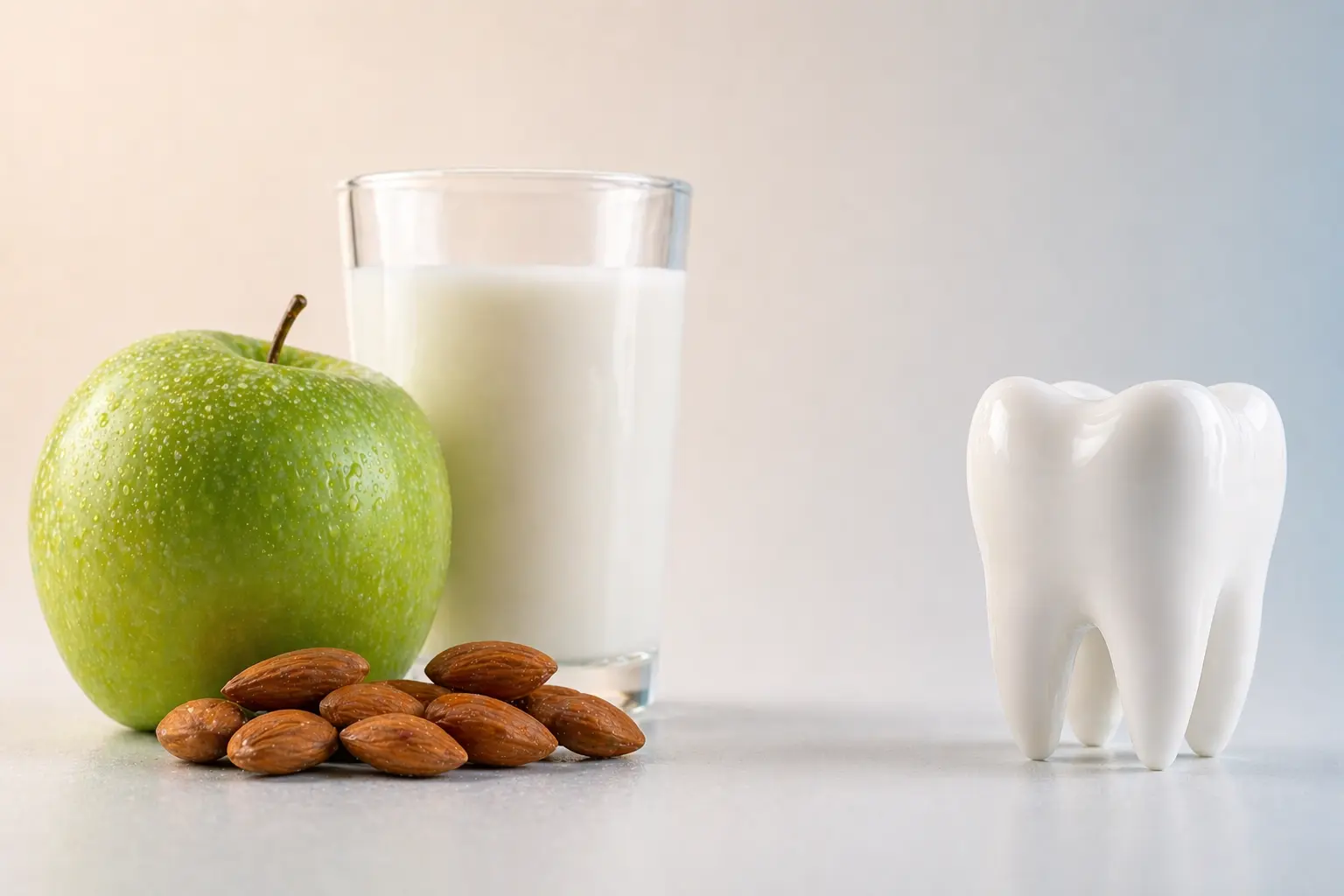
- healthy teeth
- diet and teeth
- oral care
- dentist Kharkiv
Introduction
Healthy teeth depend on more than brushing, toothpaste and regular dental visits. Your everyday diet also affects enamel, gum health and the overall balance inside the mouth. Some foods do more than simply avoid harm. They may help support a healthier oral environment, which is why nutrition can be seen as part of prevention rather than just a lifestyle detail.
Dairy products
Milk, natural yoghurt, cheese and other dairy products are often considered helpful for teeth because they contain calcium and protein.
These foods can support mineral balance and may be useful for enamel and the tissues around the teeth as part of a balanced diet.
Crunchy fruits and vegetables
Apples, carrots, celery and other crunchy foods stimulate chewing and saliva production. This matters because saliva plays a role in the mouth’s natural cleaning process.
These foods do not replace oral hygiene, but they can be a practical addition to a daily prevention routine.
Foods rich in minerals and protein
Fish, eggs, legumes, meat, nuts and some grains contain nutrients that support overall health and may also help maintain oral tissues.
A balanced diet with enough protein and minerals often contributes to long-term prevention just as much as many isolated tips.
Water as part of daily oral care
Water is often underestimated, even though it helps maintain moisture in the mouth, reduces dryness and can rinse away some food residue.
Regular water intake is especially useful after snacks, sweet foods or acidic drinks.
Why healthy foods still do not replace oral hygiene
Good nutrition helps reduce risk, but it cannot replace brushing, interdental cleaning and preventive dental visits.
Even a balanced diet does not fully prevent plaque build-up, tooth decay or gum issues if home care and professional follow-up are ignored.
What to do
If you want to support your teeth through diet, there is no need to change everything at once. It is more realistic to gradually increase foods that help support oral health while reducing frequent sugary snacks and acidic drinks.
It also helps to look not only at what you eat, but at how often you snack, how much water you drink and how consistent your home care routine is.
When to see a dentist
Even with a healthy diet, it is worth booking a consultation if:
• your teeth have become sensitive
• your gums bleed
• plaque builds up quickly
• you suspect tooth decay
• you want to understand whether your eating habits may be affecting your teeth
Treatment options
FAQ
Questions about Foods For Healthy Teeth: What To Add To Your Daily Diet
Can food really affect dental health?
Yes. Diet affects enamel, gum condition and the overall risk of tooth decay, especially when considered together with hygiene and everyday habits.
Is a healthy diet enough to protect teeth?
No. Diet matters, but it works together with home care, professional hygiene and regular dental check-ups.
Do I need to completely avoid sweets if my overall diet is good?
Not necessarily, but it helps to control how often sugary foods are consumed and avoid constant acid or sugar exposure throughout the day.
Why is water so important for the mouth?
It helps maintain moisture, supports basic cleansing and reduces the effect of food residue after meals and snacks.
Book a consultation
Book a consultation if you want to assess the condition of your teeth and gums and get prevention advice based on your diet and daily habits.
Book a consultation to get individual recommendations and the next best step for your smile.
Conclusion
Foods for healthy teeth are not a magic solution, but they can absolutely be part of prevention. The more balanced your diet is, the easier it becomes to support enamel and gum health alongside proper oral hygiene.
Next steps