
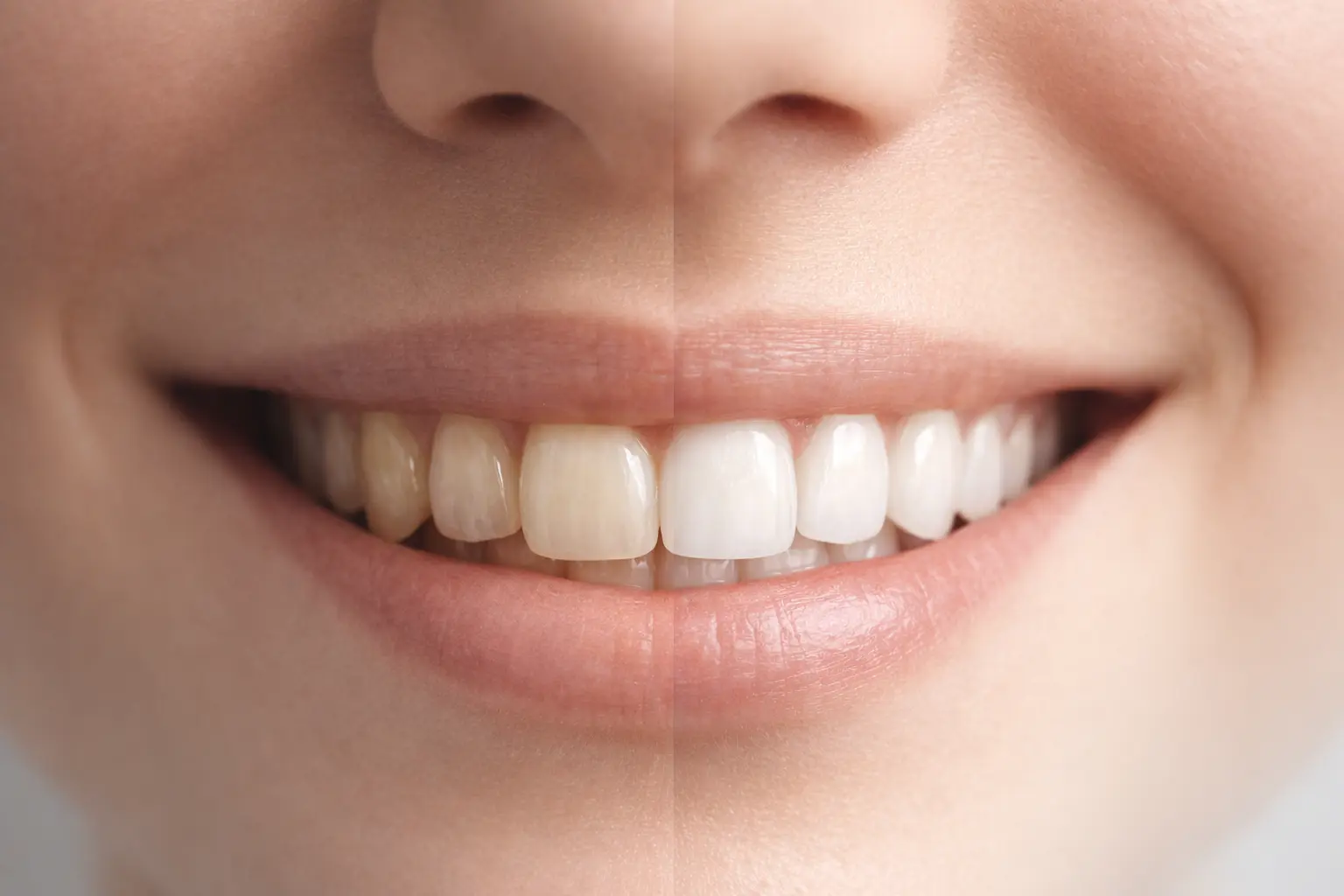
- teeth whitening
- enamel colour
- dentist Kharkiv
- smile aesthetics
Introduction
Many patients associate bright white teeth with health, confidence and a beautiful smile. In reality, enamel colour varies naturally, and whiteness alone does not determine whether teeth are healthy.
Do white teeth always mean healthy teeth?
Not necessarily. Teeth can be naturally cream, yellowish or slightly grey and still be completely healthy. On the other hand, very white teeth may be the result of whitening, restorations or veneers rather than a natural shade.
That is why dentists assess the overall condition of teeth and gums instead of judging oral health by colour alone.
What affects enamel colour
Tooth colour is influenced by genetics, age, diet, smoking habits, medications and the thickness of enamel.
Coffee, tea, red wine, pigmented foods and tobacco are among the most common reasons why teeth gradually look darker over time.
When whitening may make sense
Whitening can be a good option if discoloration is mainly caused by pigmentation and you want to improve the appearance of your smile.
Before whitening, it is important to have an examination to make sure the enamel, gums and existing restorations are suitable for the procedure.
What to do
If you are unhappy with the shade of your teeth, start with a dental consultation rather than choosing whitening products at random.
An examination helps identify whether the issue is surface staining, natural enamel colour, or something that may need a different treatment approach.
When to see a dentist
It is worth seeing a dentist if:
• you are unhappy with the colour of your teeth
• one tooth has become noticeably darker
• whitening products cause sensitivity
• you want a safer and more predictable whitening plan
Treatment options
• professional hygiene
• restorative solutions if the colour issue is related to fillings, crowns or structural changes
FAQ
Questions about Should You Whiten Your Teeth? Enamel and Oral Health
Is professional teeth whitening safe?
Modern whitening methods are generally safe when performed or supervised by a dentist after an examination.
Can I whiten my teeth at home?
Some home products may help, but they are not ideal for every case. Without a consultation, they may be ineffective or increase sensitivity.
How long do whitening results last?
It depends on oral hygiene and habits such as smoking, coffee or tea consumption. Results may last from several months to a few years.
Does everyone qualify for whitening?
No. Suitability depends on enamel condition, gum health, the type of discoloration and whether there are fillings, crowns or veneers in visible areas.
Book a consultation
Book a consultation to find out whether professional whitening is suitable for your teeth and what result you can realistically expect.
Book a consultation to get individual recommendations and the next best step for your smile.
Conclusion
White teeth do not automatically mean healthy teeth. If you want to improve the appearance of your smile, the best first step is a consultation with a dentist who can recommend the safest and most appropriate option.
Next steps